
Disclosure: AskGyd may earn a commission if you buy through links on this page, at no extra cost to you. Recommendations below include labeled placeholders until specific merchant links are added. We do not claim to have lab-tested the products discussed. Read the full disclosure.
A men’s grooming kit is easy to over-buy and easy to under-use. Gift sets are assembled to look complete on a shelf: a bag, a tin of something scented, a trimmer, two tools you already own, and a travel bottle you will never refill. A useful kit is narrower. It covers the grooming you actually do in a normal week, in containers you can replace, with tools you can clean.
This guide helps you decide what belongs in a daily kit, what is better bought as a separate refill, and which quality signals are worth paying attention to. It is not a ranked review of branded sets, and it does not invent before-and-after results, dermatology credentials, or lab scores. If you have a skin or scalp condition, or you are considering prescription-strength products, talk with a clinician rather than treating a shopping guide as medical advice.
Build around a routine, not a bag
Write down what you already do, not what a “10-step” list says you should do. A typical daily core is some combination of a cleanser, a moisturizer, and daytime sun protection for skin that sees the sun. If you shave or trim, the core also includes that tool plus a simple way to clean the skin afterwards. Everything else — masks, multiple serums, specialist oils, eye tools — is optional and should earn its place.
It helps to split the kit into daily, weekly, and travel. Daily items should be easy to grab with wet hands and easy to refill. Weekly items (a nail clipper, a longer trim, an exfoliating cloth) can live in a drawer. Travel items should be leak-resistant and, for cabin bags, sized to current airline liquid rules. A single overstuffed toiletry bag that tries to be all three usually becomes a jumble you stop unzipping.
Skin: fewer products, clearer jobs
A cleanser should match how oily or dry your skin feels by late afternoon, and how hard your tap water is, more than it should match a scent. Gel or foaming cleansers can feel satisfying if you get shiny; they can also leave drier skin tight. Cream or low-foam cleansers are often more comfortable in winter or in dry offices. “Antibacterial” marketing is not automatically better for a daily face wash, and fragrance is a common irritant if your skin is already reactive.
A moisturizer is doing a simple job: reduce water loss and leave the surface comfortable. Lighter, gel-cream textures tend to suit humid climates and oilier skin; richer creams tend to suit dry air and shaving irritation. You do not need a different jar for every zone of the face on day one. If your skin stings, look at fragrance, alcohol content, and whether you have introduced several new products at once.
Sun protection is the product most kits quietly omit, and the one that most changes how skin ages in the sun. If you walk, drive, or work near windows, a daytime moisturizer with broad-spectrum sunscreen, or a separate sunscreen you will actually apply, belongs in the kit. Feel and finish matter because a formula you hate will stay in the tube. We will not invent SPF test results here; read the labeled SPF and broad-spectrum statement, and reapply according to the product directions when you are outdoors.
Shaving and beards are different kits
A clean-shaven routine and a beard routine share a cleanser and, often, some kind of oil or balm for comfort. They do not share every tool. If you shave with a razor, you need a lubricant (cream, soap, or oil), a rinse, and a way to keep the blade clean and dry. Blade quality and replacement frequency usually matter more than a heavy chrome handle. If you use an electric shaver, the foil or rotary head needs regular cleaning, and a damaged foil should be replaced rather than used “a little longer.”
If you keep a beard, a trimmer with guards you will actually use is the center of the kit. Length consistency comes from the guard, not from freehand confidence at 7 a.m. A wide-tooth comb or beard brush helps you see uneven areas; a small scissors is useful for stray hairs if you have a steady hand. Beard oil or balm is optional comfort, not a requirement. Look at ingredient lists if you are fragrance-sensitive, and keep oils off shared pillowcases if they stain.
Trimmers, clippers, and maintenance
Body, beard, and hair clippers are related tools with different blades and guards. A kit that claims to do all three with one head can work for light use; frequent haircuts or very coarse hair often go better with a tool meant for that job. Cordless convenience is real. So is battery fade. A trimmer that can run while plugged in is more forgiving when the charge is low. Waterproof or at least rinsable heads are easier to keep hygienic, provided you dry them as the manual directs.
Quality signals that are more useful than a “titanium professional” label: replacement blades or foils are actually sold separately, guards click on securely, the motor does not bog down on slightly longer hair, and the brand or manufacturer publishes a parts list. Oil the blade if the manual says to. Hair left under a guard is a common reason a “bad trimmer” starts pulling.
Nails, hair, and the unglamorous tools
A nail clipper that does not twist, a file, and (if you use them) tweezers with aligned tips will be used for years. Cheap tools that slip are not a savings. For hair, most people need a comb or brush that matches their texture and, if they style, a product with a job — hold, moisture, or texture — rather than three half-used tins. Dry shampoo and styling powders can irritate scalps; use them as directed and skip them if they itch.
Dental care is grooming too, even if it never appears in a “men’s kit” photo. A toothbrush you replace on a sensible schedule and a floss you will use belong closer to the daily kit than a novelty beard stamp.
Travel without a suitcase of leaks
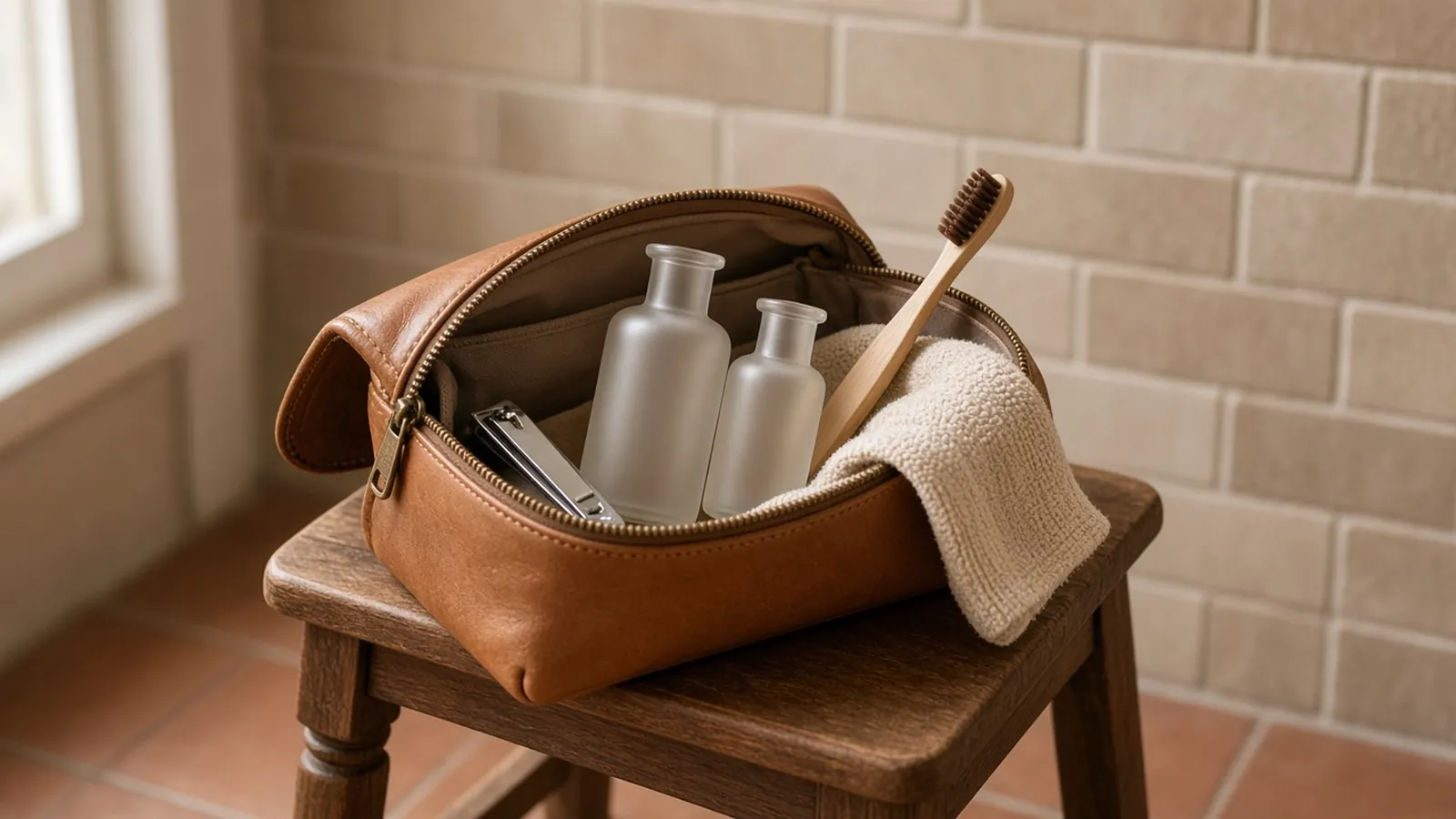
Decant daily liquids into small, clearly labeled bottles with tight caps, and bag them. Pump bottles leak in cabin pressure more often than you expect. Solid cleanser bars, stick moisturizers, and stick sunscreens can be easier on short trips, as long as you still like using them at home. Blades and scissors are subject to airline rules; check current carry-on restrictions rather than assuming a grooming kit is allowed as packed. A zipper pouch with a wide opening is easier than a leather roll you have to retie with wet hands in an airplane lavatory.
What “quality” reasonably means here
Pay for refills and replaceable parts, not for a bag logo. A well-made kit is one whose cleanser and moisturizer can be bought again in the same formula, whose trimmer blades are available a year later, and whose bag can be washed or wiped out. Scent is personal; if you share a bathroom or an office, unscented or lightly scented products are easier on other people and often easier on skin.
Be cautious with kits that bury a short list of useful items under many travel minis you cannot refill. Be cautious, too, with aggressive claims: “clinically proven jawline,” “guaranteed beard growth,” or “cures acne.” Those belong in a clinician’s office or a properly designed study, not in a product bullet.
Product slots (affiliate placeholders)
The following cards are category placeholders, not tested product awards.
A simple daily skin trio
Cleanser, moisturizer, and a daytime sunscreen or moisturizer-with-sunscreen you will actually apply. Prefer refillable or easily replaced formulas and a texture that matches your climate.
View productA beard or stubble trimmer with guards
Look for secure guards, a rinsable or clearly cleanable head, available replacement parts, and a battery you can live with. The guards do the work; the unguarded blade is for careful edges only.
View productA compact travel grooming pouch
A wide-zip, wipe-clean pouch with room for leak-bagged liquids and a trimmer, not a 20-piece gift roll. Confirm current airline rules for liquids and blades before you pack.
View productWhat to remember
A good grooming kit is a short list you will finish: cleanse, moisturize, protect from the sun, and maintain whatever shave or beard you actually wear. Buy replaceable parts and refills. Leave the gift-set filler on the shelf.
Common questions
Do I need a separate eye cream?
Not as a starting rule. If your regular moisturizer is comfortable around the eyes and does not migrate in a way that bothers you, you can keep the kit simple. If the eye area is very dry or easily irritated, a smaller, fragrance-free product can make sense — but it is not mandatory for a complete routine.
Is an expensive razor handle worth it?
The handle is the long-lived part; the blades are the consumable. A stable, easy-to-rinse handle is useful, but a high price does not automatically mean a closer or kinder shave. Budget for blades you can keep replacing.
Can a kit replace a dermatologist visit?
No. Persistent acne, sudden rashes, hair loss, or irritation that does not settle after you simplify products are reasons to get professional advice. This guide is general shopping information.
Related: More in Men's Grooming · Choosing Comfortable Underwear