
Disclosure: AskGyd may earn a commission if you buy through links on this page, at no extra cost to you. Recommendations below include labeled placeholders until specific merchant links are added. We do not claim to have lab-tested the products discussed. Read the full disclosure.
If you wake up damp, kick the covers off, or dread getting into a warm bed, you have probably shopped for “cooling sheets.” The phrase is everywhere. It is also almost never defined. A package can say cooling because the fabric feels slick for ten seconds, because the weave is airy, or simply because the marketing team chose the word.
This guide does not rank branded sheet sets, invent lab scores, or claim that we sleep-tested a shortlist in a climate chamber. Instead, it explains the variables that actually change how a sheet behaves at 2 a.m.: weave, fiber, fabric weight, finish, and fit. If you understand those, you can read a product listing more carefully and ignore the claims that do not map to a physical difference.
Start with why you feel hot in bed
Sheets sit at the surface of a much larger system. Room temperature, a heavy duvet, a foam mattress that holds heat, tight pajamas, alcohol, spicy food, and hormonal night sweats can all overwhelm even a breathable sheet. A better sheet can make the layer against your skin less insulating. It cannot fix a midsummer bedroom with no airflow or a high-tog comforter used year-round.
It also helps to separate two different sensations that brands lump together. Some fabrics feel initially cool to the touch because they are smooth and conduct heat away from your hand for a moment. Others stay more comfortable overnight because they move moisture and trap less still air. A slick polyester can feel cool in the store and clammy at 3 a.m. A slightly textured linen may feel rustic at first and more livable by week two. When you shop, ask which of those sensations you actually want.
Weave matters more than the word “crisp”
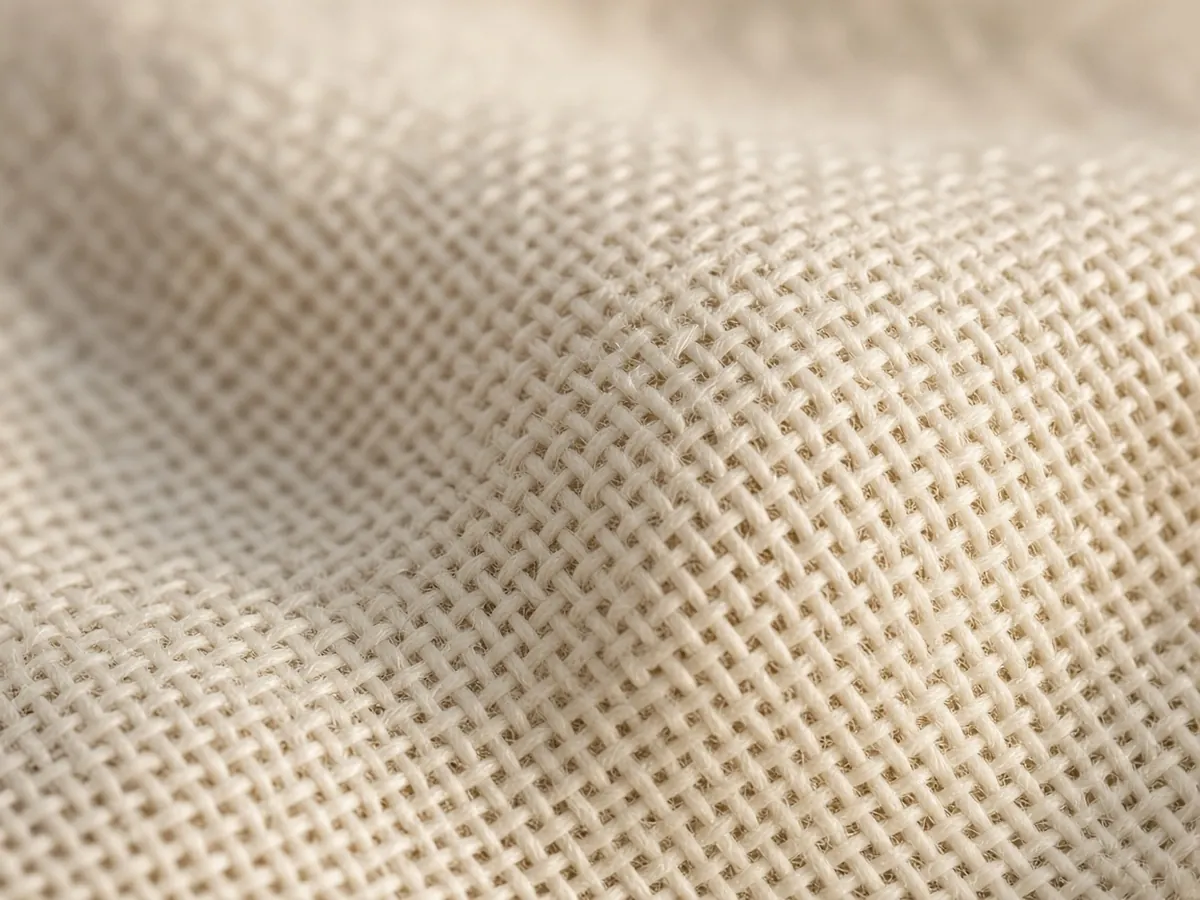
Percale is a plain, one-over-one-under weave. Good percale often feels matte and lightly crisp, with more visible texture than a glossy hotel sheet. The structure typically leaves a bit more space for air to move than a comparable sateen, which is why many hot sleepers start here. Percale also wrinkles. That is not a manufacturing defect; it is a characteristic of the weave and of many cotton yarns.
Sateen floats more yarns on the surface, which is why it can look slightly lustrous and feel smoother or more draped. That extra surface yarn can make the fabric feel denser. Sateen is not “bad,” and some people prefer it in a well-cooled bedroom. It is simply a weaker default if your main problem is trapped heat.
Linen weaves are usually more open and slubbed. The texture is part of the point. Air moves easily, the fabric wrinkles freely, and the hand starts rustic and often softens with washing. If you dislike any rumple on a made bed, linen will frustrate you no matter how well it sleeps.
Jersey and other knits stretch like a T-shirt. They can feel familiar and cozy. They also tend to cling and can feel warmer than a comparable woven sheet, especially in heavier weights. If you want a sheet that disappears thermally, a light woven fabric is usually the more logical search.
Fiber: what each family typically does
Cotton remains the most common sheet fiber for a reason: it is breathable when the cloth is not overly heavy, it washes easily, and it comes in a wide range of prices. Longer-staple cotton often feels smoother and pills less, but “long-staple” on a label is not a cooling guarantee. A dense, heavy cotton sateen can sleep warmer than a lighter, coarser percale.
Linen, made from flax, is strong, absorbent, and typically excellent in humid heat. It wrinkles, it has a slubbed look, and it can feel stiff out of the package. People who like linen usually like it more after several washes. People who want a pressed, formal bed often do not convert.
Lyocell (including fibers you may see described with brand names for a specific cellulosic process) is a smooth wood-pulp fiber that often manages moisture well and drapes with a slightly silkier hand than percale. Care labels matter: some lyocell blends wrinkle less than linen but still dislike aggressive heat in the dryer. Treat “bamboo” carefully. Much “bamboo bedding” is a viscose or rayon made from bamboo pulp. It can feel silky, but it is a chemically processed cellulose fiber, not a naturally cooler plant cloth in the way the marketing sometimes implies. Quality and environmental claims vary widely; ask for the actual fiber content on the label.
Polyester and many poly blends are durable, often wrinkle-resistant, and sometimes less expensive. They can also trap more heat or feel clammy unless the construction is genuinely light and open. Be skeptical of “cooling luxury microfiber” language that does not also tell you the weave and weight. Silk can feel temperature-adaptive for some sleepers, but it is delicate, costly to maintain, and a poor first experiment if you mainly need a wash-and-dry everyday sheet. Wool appears in some specialty bedding and can regulate temperature surprisingly well, but the texture and price put it outside most people’s first shortlist.
Thread count is a weak cooling signal
Thread count is the number of yarns in one square inch of fabric. It is easy to print on a bag and easy to inflate. Manufacturers can twist two thinner plies together and count them in ways that make a modest cloth look like an 800- or 1,000-thread sheet. A mid-range percale in the neighborhood of a few hundred threads can sleep cooler, and last more honestly, than a dense high-count sateen whose only selling point is the number.
If a listing leads with thread count and never mentions weave, fiber percentage, pocket depth, or weight, treat the listing as incomplete. When weight is given in GSM (grams per square meter), use it. Heavier cloth generally insulates more. There is no single “correct” GSM, but a lighter, well-made percale or linen is a more promising starting point for hot sleep than a heavy, peachy, brushed cloth that feels like a flannel in disguise.
Finish, color, and the “hotel” feel
Softener-heavy or silicone-coated finishes can make a sheet feel instantly plush and slightly less breathable. Brushed or “peach” finishes raise fibers for a cozy hand; cozy is often warmer. A matte, unbrushed percale will feel less like a spa robe and more like a shirt — which is what many hot sleepers actually want.
Dark, heavily dyed fabrics are not automatically hotter, but they can feel less inviting in a sunlit room and may fade or crock if poorly dyed. More important than color is a clear fiber label and a finish that does not coat the cloth in a way you cannot wash out.
Fit and construction
Measure your mattress height, including any topper. A fitted sheet that pops off at 2 a.m. is not a cooling problem, but it will feel like one. Look for a stated pocket depth with some margin, and for elastic that runs the full circumference rather than only the corners, when you can find that detail. Adjustable bases and split-king setups often need a specifically cut fitted sheet; a standard deep pocket will not always solve a flexing head section.
Look also at seams, a generous flat sheet if you use one, and pillowcases with an envelope closure if you dislike exposed pillow ends. These are comfort and longevity details, not marketing adjectives.
Match the sheet to your climate, not a seasonless ideal
In humid heat, moisture movement and an open weave usually matter most: linen and lighter percale are logical places to start. In a dry, heavily air-conditioned bedroom, some people find linen a little too rustic and prefer a smooth cotton or lyocell that still is not heavy. If you share a bed with someone who runs cold, a breathable sheet plus a split-layer blanket strategy is often better than trying to make one “magic” sheet serve both of you.
Remember the rest of the stack. A cooling sheet under a heavy synthetic comforter is still a warm bed. If night sweats are medical or hormonal, a sheet change can help at the surface, but it is not treatment. Talk with a clinician if sleep heat is sudden or severe.
Care, which quietly decides whether the sheet stays nice
Wash new sheets before the first night. Follow the care label for water temperature and drying. Heavy liquid fabric softener can leave a coating that reduces absorbency over time; a modest amount of detergent and occasional vinegar rinses (if your washer and the care label allow) are often kinder to breathable cloth. High dryer heat shrinks some cottons and ages elastic. Line-drying or a lower dryer setting helps linen and percale, at the cost of more wrinkles.
Pilling on lower-quality cotton or polyester blends is common in the first months, especially if you have rough feet or a scratchy beard against a pillowcase. Thinning at the fold, torn corners, and dead elastic are signs it is time to replace the fitted sheet even if the flat sheet still looks fine.
How to shortlist without a ranked test
Write down four constraints before you browse: mattress depth, climate, wrinkle tolerance, and how often you want to launder the set. Prefer listings that state fiber content in percentages, name the weave, and give pocket depth. Be wary of vague phrases such as “hotel luxury cooling technology,” “clinically proven ice fabric,” or “cures night sweats.” Those are claims without a mechanism.
If you can order from a seller with a clear return window, that is often the most practical “test” available to a household buyer. We are not endorsing a particular retailer. We are suggesting that a return policy is part of the product, especially when you cannot feel the weave in a store.
Product slots (affiliate placeholders)
The cards below are labeled placeholders for future merchant links. They describe types of sheet you might shortlist, not specific tested models, prices, or ratings.
A lightweight cotton percale set
Look for a named percale weave, a stated pocket depth, and a mid-weight cloth rather than a high thread-count claim. This is a logical first shortlist item for hot sleepers who want a familiar, crisp cotton feel.
View productA linen or linen-cotton set
Best considered if you sleep in humid heat and can live with slubs and wrinkles. Confirm the linen percentage and expect the hand to soften after several washes.
View productA lyocell or cotton-lyocell blend set
A smoother hand with typically good moisture management. Read the care label before you buy if you rely on high-heat drying.
View productWhat to remember
For hot sleepers, weave and weight usually beat thread count. Start with a lighter percale, linen, or lyocell-type cloth, measure your mattress, and treat “cooling” as a question about moisture and trapped air — not a feature you can trust from a headline alone.
Common questions
Does a higher thread count keep you cooler?
Usually not. A dense, high-count fabric can trap more heat than a lighter percale or linen. Use thread count as a weak, easily inflated number, and put more weight on weave, fiber, and fabric weight.
Are bamboo sheets cooler than cotton?
Not automatically. Many bamboo sheets are viscose or rayon with a silky hand. Some people like the feel; it is not a guaranteed upgrade over a well-made, lightweight cotton percale. Read the fiber label rather than the plant in the photo.
Should I skip a top sheet?
That is preference, not performance science. Some hot sleepers like a single top layer they can kick off. Others want a top sheet so a duvet cover is washed less often. Either can work if the fabric itself is breathable.
Related: More in Home & Bedding · Hand Warmers: Rechargeable vs Disposable