
Disclosure: AskGyd may earn a commission if you buy through links on this page, at no extra cost to you. Recommendations below include labeled placeholders until specific merchant links are added. We do not claim to have lab-tested the products discussed. Read the full disclosure.
A dog bed fails in ordinary, expensive ways. It is too short, so the animal sleeps on the floor with two paws hanging off. It is too soft, so an older dog struggles to stand. It is too tempting to chew, so the foam is on the rug by Thursday. Or the cover cannot be washed, and the bed is retired for smell long before the foam is worn out. Almost all of those failures are predictable if you measure first and think about how your dog actually sleeps.
This guide covers size, fill, foam, covers, and the questions that matter for puppies, chewers, and senior dogs. It does not rank branded beds, invent orthopedic test scores, or claim we instrumented a kennel. If your dog has a diagnosed joint condition, your veterinarian’s advice about support and height should sit above any shopping article, including this one.
Measure the dog, not the photo
The most useful measurement is the dog stretched out on a hard floor: nose to the base of the tail, plus some margin, and the width at the shoulders or hips, whichever is larger. Many dogs sleep on their side with legs extended. A bed that looks generous under a curled-up product-photo puppy can be short for the same breed in a living room. If your dog curls tightly, you can go a little smaller, but it is safer to have unused space than a bed the animal abandons.
Also measure the place the bed will live: a crate (use the crate’s interior, and confirm the bed is meant for crate use), a corner, or the side of a couch. A bed that does not fit the crate is not a crate bed. Bolster beds — the ones with a raised rim — give dogs something to lean against, which many like, and they reduce the usable flat area, which shows up if you only measured the outside footprint.
Foam, fiber fill, and everything in between
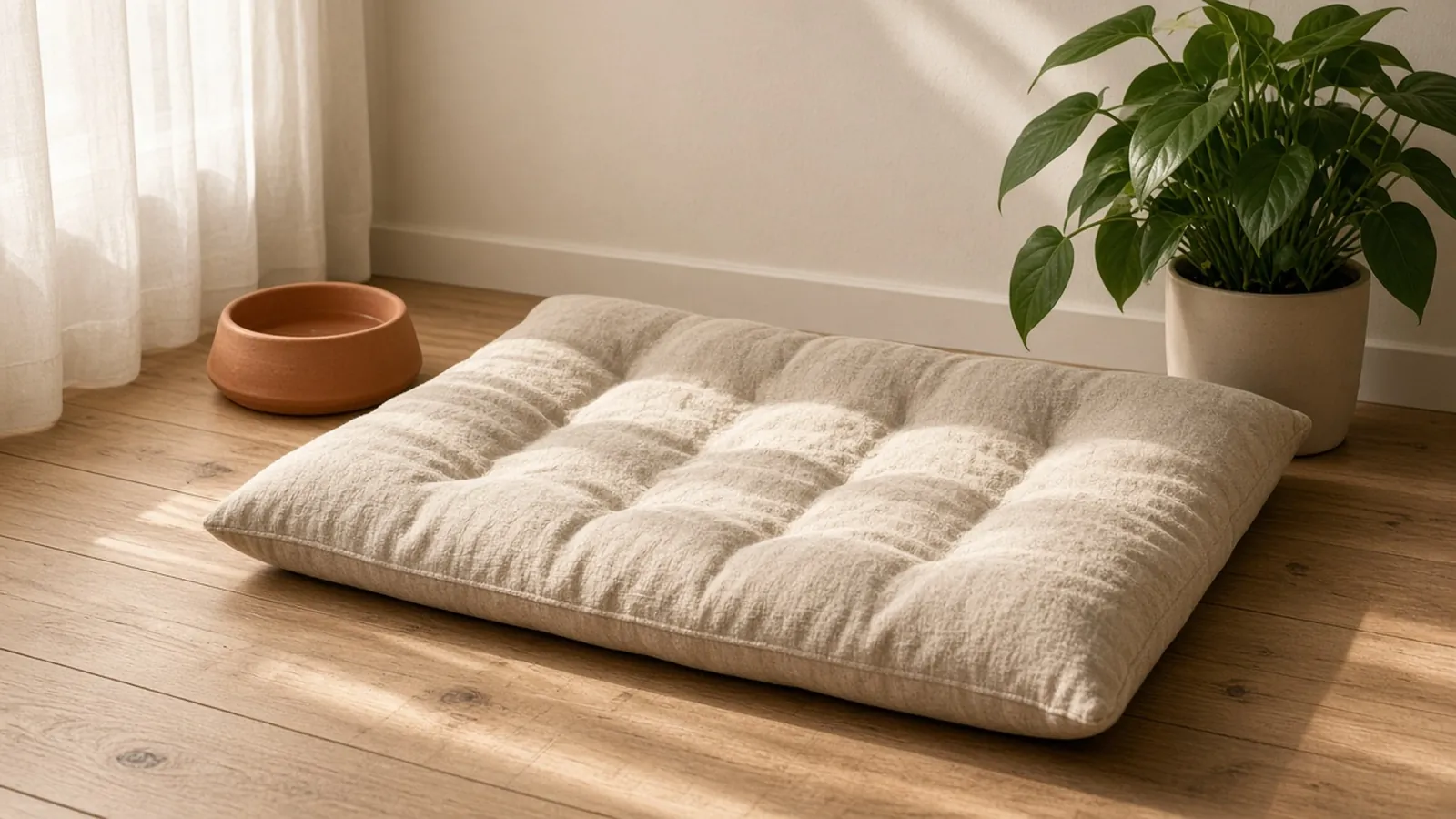
Slab foam (often sold as “orthopedic” when it is a denser polyurethane or a memory-foam style foam) offers a flatter, more even surface. Denser foam generally sags more slowly and can be easier for some stiff or senior dogs to rise from than a deep, loose pile. Density and thickness both matter; a thin, soft foam dressed in medical-sounding language is still a thin, soft foam. We will not invent a single “correct” density number, because body weight and preferred sleep style vary. As a shopping habit, look for a stated thickness and, when available, a density or foam type, and be wary of the word orthopedic used with no other specification.
Shredded foam or fiber fill feels more like a beanbag or a stuffed cushion. Some dogs love to knead and nest in it. The fill can shift, flatten, and clump, and it can be messy if a chewer opens the cover. Some beds let you add or remove fill, which is useful. Pillow-style and nest beds suit dogs that curl. Raised or cot-style beds (fabric stretched on a frame) keep a dog off a cold or hot floor and dry more easily after a muddy day; they offer less cushioning for bony dogs and can be noisy or tippy if poorly built. In summer, a cot or a flatter, breathable pad can be more comfortable than a high-sided plush cave; in winter, the reverse is often true.
The cover is half the product
Assume the bed will be slept on after a rainy walk. A removable cover with a zipper you can actually operate, in a fabric that can be machine-washed on a practical setting, will decide whether the bed lasts a year. Look at zipper quality and whether the foam itself has a liner. “Water resistant” is not the same as waterproof; it may help with a spilled bowl and fail against a soaked dog. Darker or patterned fabrics hide hair; very long faux-fur covers look luxurious and collect more debris.
If anyone in the house has allergies, washability matters even more, and so does how much loose fiber the cover sheds. No bed will make a home allergen-free. If your dog is a messy drinker, consider a cover you will not mind washing often, and place the bed a little away from the bowl.
Chewers, puppies, and supervision
A soft bed can be a toy if a dog is a destroyer of textiles. For dedicated chewers, a tough cot, a raised frame, or a bed specifically designed with chew-resistant materials may last longer than a plush pillow — and even then, no fabric bed is chew-proof if left with an unsupervised puppy. Swallowing foam or stuffing is a veterinary emergency risk. If your dog shreds bedding, do not treat a new “indestructible” claim as a license to leave them alone with it on the first day. Introduce the bed when you can watch, and keep damaged foam out of reach.
Puppies also outgrow beds. It can be more practical to buy a washable, modest bed now and a better-fitting supportive bed at adult size than to over-invest in a large orthopedic slab a puppy will treat as a chew. Adult dogs new to a home may ignore a bed until it carries their smell; placing a familiar blanket on top is a low-cost experiment.
Older dogs and joint support
Senior dogs often do better with a bed they can step onto without a high wall, a surface that does not swallow them, and enough traction to stand up. Very plush, deep fills can feel luxurious and still be hard to exit. A lower bolster or a flat slab with a non-slip bottom can be easier. If the dog already sleeps on a particular sofa cushion, notice the height and firmness they chose for themselves. For diagnosed arthritis or post-surgical needs, ask the veterinarian whether a particular thickness or a ramp is appropriate. Heating pads and plug-in warming beds have their own burn and chew risks; use only products meant for pets, and follow the instructions carefully.
Where the bed lives changes the shortlist
A bed beside a heating vent will feel different from a bed on a cold tiled floor. In multi-dog homes, some animals guard a bed; extras in different rooms can reduce conflict, or you may need to manage access. Outdoor or garage beds, if you use them at all, must be suited to the climate and never treated as a substitute for safe shelter. This guide assumes a typical indoor home. If you crate at night, the bed should not interfere with door closure or become a tangle hazard with a collar; many people remove hanging tags and skip loose blankets for dogs that tear them.
How to shortlist
Write down the stretched-out measurement, the dog’s age and chew habits, and whether you will wash the cover every week or every month. Prefer listings that state interior dimensions, cover care, and fill type in plain language. Be cautious with human-mattress adjectives that have no thickness or foam information behind them. If you can, keep the cardboard until you see whether the dog uses the bed; many sellers will not take a used pet bed back, which is reasonable, so sizing carefully up front matters more than it does with a pair of shoes.
Product slots (affiliate placeholders)
These cards describe bed types for future affiliate links. They are not a ranking of tested models.
A supportive foam slab bed with a washable cover
Look for a stated thickness, a zipper cover you can machine-wash, and interior dimensions larger than your dog stretched out. A useful pattern for many adult and senior dogs that sleep on their side.
View productA bolster or nest bed for dogs that curl
Confirm that the flat inner area, not just the outer footprint, is large enough. Bolsters should be a height your dog can still step over comfortably.
View productA raised cot-style bed
Practical for warm weather, muddy dogs, or chewers who destroy plush pillows — with less cushioning for bony or elderly animals. Check frame stability and fabric tautness.
View productWhat to remember
Measure the stretched-out dog and the space the bed must fit. Choose a fill that matches how the animal sleeps and stands up, and treat a washable cover as essential. “Orthopedic” without a thickness or foam description is just a word. Watch chewers, and let a veterinarian guide support needs for a painful joint.
Common questions
How do I know if a bed is big enough?
If the dog can lie on their side with legs loosely extended and still stay on the sleeping surface, the size is in a reasonable range. When in doubt, go up a size, and remember that bolsters shrink the usable flat area.
Does my dog need an orthopedic bed?
Not automatically. Some young, healthy dogs sleep well on a simple cushion. Denser foam can help some older or heavier dogs. If there is stiffness, limping, or a diagnosis, ask your veterinarian what support and height to look for rather than relying on the word orthopedic alone.
The dog will not get on the new bed. Now what?
Try it in the spot they already choose, put a familiar-smelling blanket on top, and give it a few days. Some dogs dislike a slick cover or a high bolster. A bed that is too small or too unstable is also a reason they go back to the floor.
Related: More in Pets · All guides